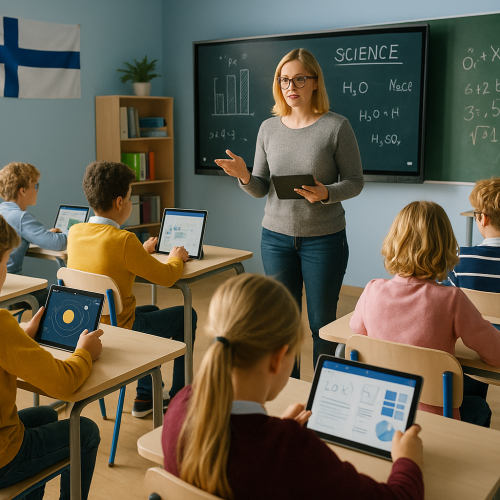


In recent years, Finland has once again captured the world’s attention — not for its traditional education system, but for how it has embraced digital learning in the 21st century. Known globally for having one of the most effective and equitable education systems, Finland is now applying its core values of accessibility, innovation, and personalized learning to the realm of online education. This digital shift is not just a response to temporary challenges like the COVID-19 pandemic, but a long-term strategy for preparing students for the future.
The Finnish online education model blends high-quality content, advanced technology, and pedagogical expertise in a way that maintains the country’s educational excellence. With strong support from government policies and a culture that values lifelong learning, Finland is creating virtual learning environments that empower both students and teachers. As the digital landscape evolves, the Finnish approach is setting a global standard for how to harness the power of technology in education.
Government Support and Strategic Planning
The Finnish government plays a crucial role in the success of online education by providing robust infrastructure and long-term strategic investment. Policies prioritize digital equity, ensuring all students — regardless of their background — have access to reliable internet and appropriate devices. This has been particularly transformative for students in rural areas, where physical access to quality education was once limited.
In addition to infrastructure, Finland invests heavily in teacher training and the development of digital learning materials. The government collaborates with universities, tech companies, and pedagogical researchers to ensure that online content meets high academic standards and aligns with modern teaching practices. This partnership-driven approach keeps Finland ahead in the global education race.
Teacher Empowerment and Innovation
One of the key drivers of Finland’s online education success is the empowerment of teachers. Rather than seeing technology as a replacement, Finnish educators use it as a tool to enhance their teaching methods. Teachers are trusted professionals in Finland, and they are given the freedom to experiment with new digital tools and platforms in their classrooms.
Innovative teaching practices, such as project-based learning, flipped classrooms, and personalized learning paths, are increasingly common in Finnish online environments. Educators have access to professional development programs that help them stay current with the latest educational technologies. This culture of trust and innovation strengthens teacher motivation and improves learning outcomes.

Student-Centered Learning Models
At the heart of Finland’s online education revolution is a student-centered approach that focuses on individual needs, interests, and learning styles. Digital platforms allow students to learn at their own pace, revisit content as needed, and receive immediate feedback. This flexibility is especially beneficial for students with learning differences or those who need more time to grasp complex concepts.
The use of gamification, interactive simulations, and collaborative tools fosters deeper engagement and motivation among students. Finnish online education does not treat learners as passive recipients of information but as active participants in their own learning journey. This empowerment leads to higher levels of autonomy, self-regulation, and long-term academic success.
Global Reach and Educational Export
Finland is also leveraging its expertise in online education as a form of soft power and economic opportunity. Finnish edtech companies, supported by government initiatives, are exporting digital learning solutions around the world. From Asia to Africa, Finnish platforms and curricula are being adopted by schools that aspire to emulate Finland’s educational quality.
This global expansion also enhances Finland’s own system by encouraging cultural exchange and continuous improvement. International collaborations allow Finnish educators to adapt their methods to diverse contexts, enriching their professional development. In turn, Finland’s reputation as a leader in education is further solidified.
A Model for the Future
The Finnish experience proves that online education can be both effective and equitable when built on a foundation of trust, innovation, and inclusion. By staying true to its core values while embracing digital transformation, Finland is showing the world a sustainable path forward. Education in Finland is no longer confined to classrooms — it’s a dynamic, accessible, and global experience.
As more countries seek to modernize their educational systems, the Finnish model provides valuable lessons on how to combine technology with pedagogy in a way that truly benefits learners. The revolution in online education is not just about digital tools — it’s about rethinking how education is delivered, and Finland is leading the way.